.
So,
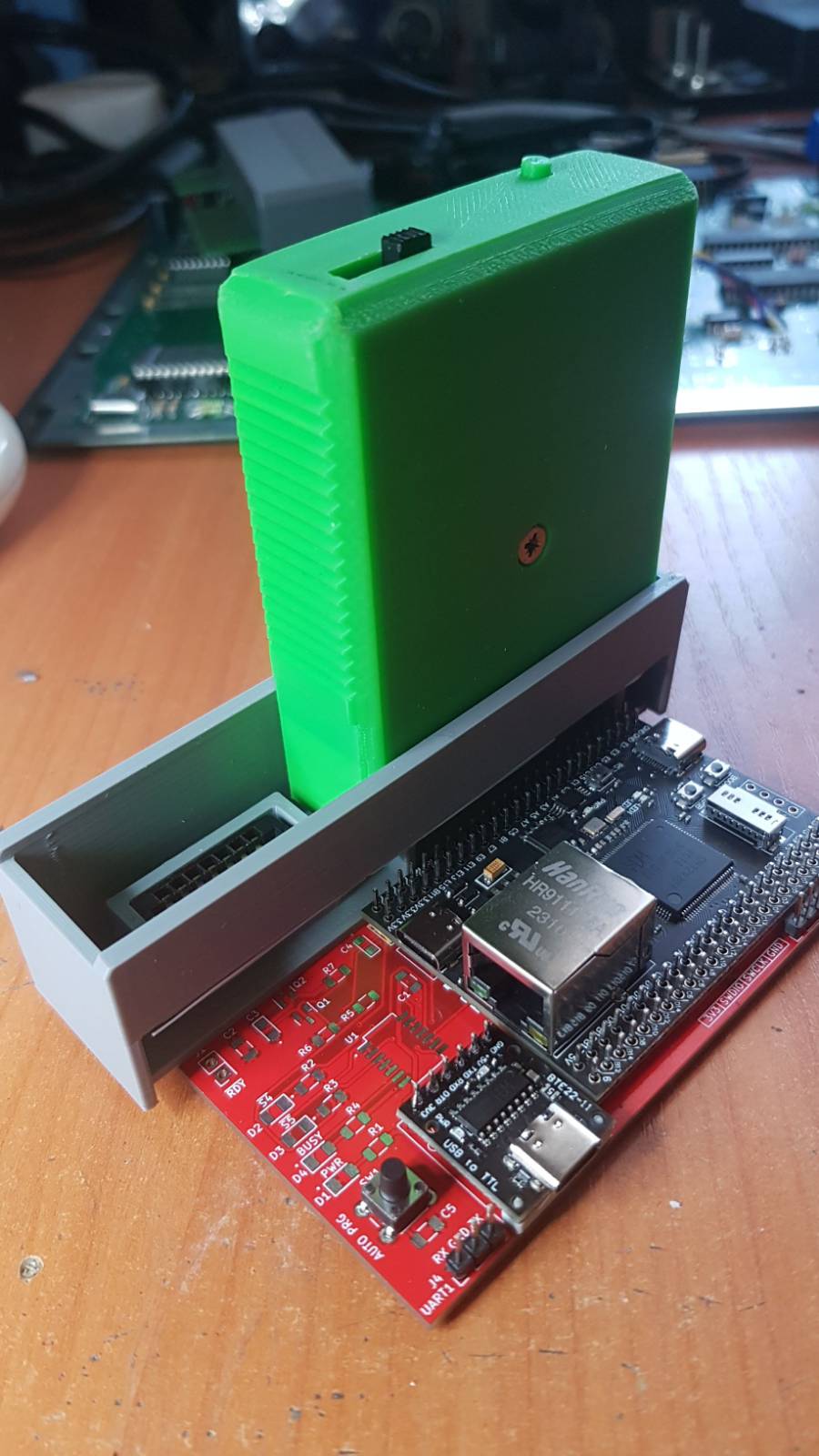
nach meinem Reminder gestern hier (und im AA-Forum), gab es doch tatsächlich heute früh um 3 Uhr
noch eine Einreichung für den AHC 2024 😁 !
Ich freue mich, hier die zweite Einreichung für den Hardwarewettbewerb 2024 anzukündigen 😎 🙂 !
Unser - auch nicht ganz unbekannter 😉 - Bertrand (aka ScreamingAtTheRadio) hat am 30.07.2024 sein
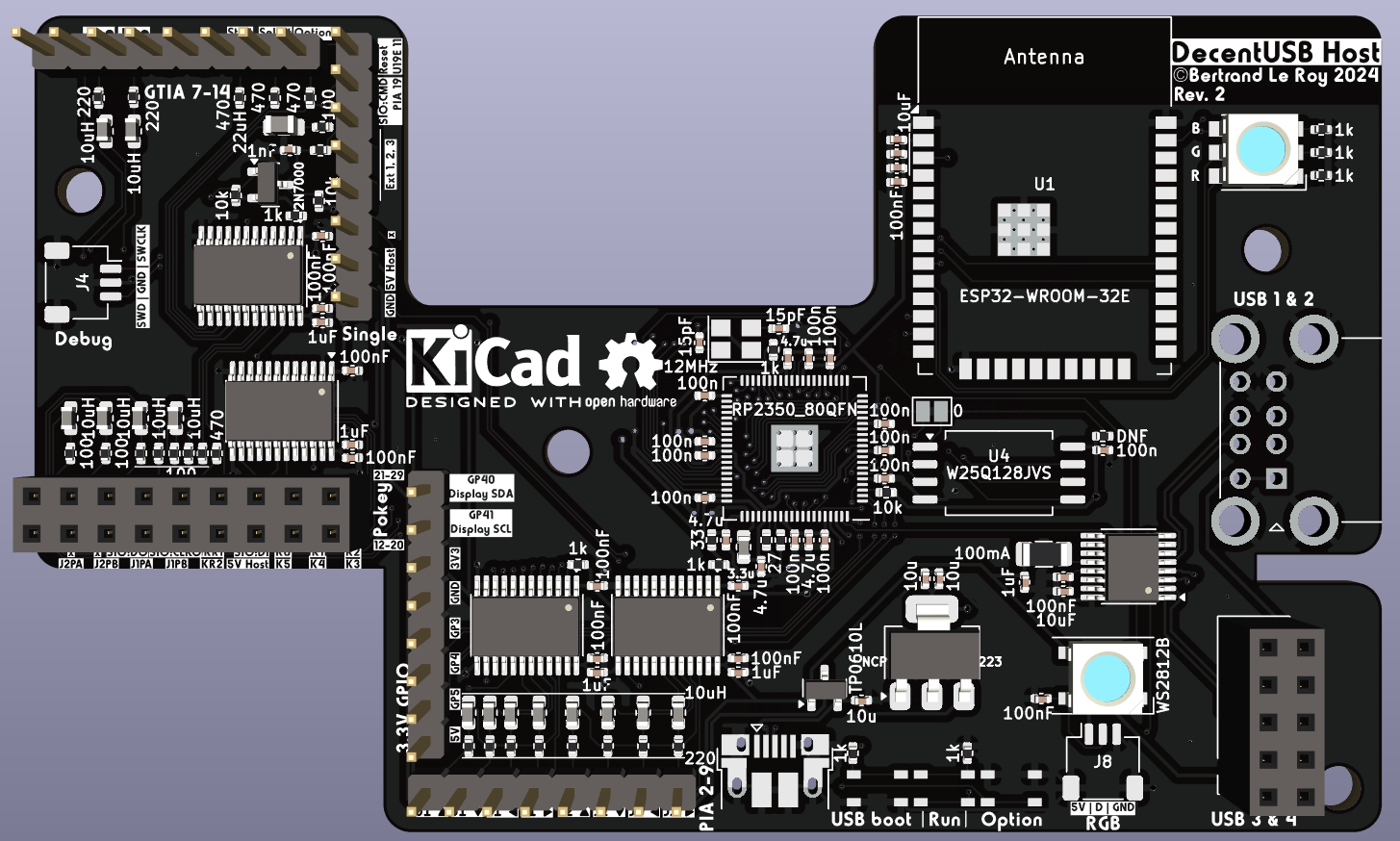
neuestes Projekt "DecentUSB Host - a USB / Bluetooth / Wifi host for Atari 8-bit computers"
als work in Progress für den ABBUC Hardwarewettbewerb 2024 eingereicht!
Hier schon mal ein Auszug aus seiner Beschreibung (etwas gekürzt):
DecentUSB Host - a USB / Bluetooth / Wifi host for Atari 8-bit computers
Disclaimer
This is very much a prototype. Both the hardware and the software are work in progress but the proof of
concept is here.
Summary
The DecentUSB Host aims at being a low-cost extension for Atari 8-bit computers that brings USB, Bluetooh
and Wifi capabilities to the platform. It's open source both in hardware and software to allow the community
to easily build new features.
The device is a multi-function interface to keyboards, gamepads or memory devices in a single board that
costs less than $15 to build.
The Raspberry Pi Pico has been a fantastic booster for retro-computer extensions. Its fast PIO state machines
and its extremely low price enable applications involving precise timing of signals with a much lower barrier to
entry than FPGAs.
Specifically, the Pico-W can act as a USB host, a Bluetooth host, and a WiFi card. By connecting it internally to
the relevant Atari 8-bit buses and signals, we can interface modern devices with our favorite retro platform.
Applications
Once drivers have been built, we should be able to support the following scenarios (non exhaustive list):
- USB and Bluetooth keyboards
- USB and Bluetooth gamepads
- USB and Bluetooth mouses
- USB stick drives and SD cards
Internet access (potentially in a FujiNet-compatible way)
Atari to PC communication (potentially in a SIO2PC-compatible way)
Internal interfaces
The DecentUSB Host board exposes pins that connect to the following signals inside the Atari:
GND and 5V power the Pi and its helper chips
Pokey K0-6, KR1 and KR2: enables the device to simulate a keyboard
Start, select, option, reset: enables console key control, for example through an external keyboard
SIO clock in/out, data in/out and command: enables SIO device simulation
Joystick port 1 up, down, left, right and fire as well as A_POT: enables joystick simulation
Potentially other signals using the remaining free GPIOs on the Pi
External interfaces
USB-A: enables the connection of keyboards, gamepads, memory cards, etc.
WiFi: enables connecting the Atari to a WiFi network
Bluetooth: enables the connection of wireless keyboards, gamepads, etc.
Extra GPIOs: can be used to connect a small screen and buttons to control the device (for example to
select a disk image on a USB stick)
Physically, the board is designed to fit in an Atari 800XL between the ROMs and the SIO port. Optionally, the
case can be modified on the right side behind the joystick ports to let a USB port through. If the user doesn't
want to use USB but only Bluetooth and Wifi, the board can operate without case mods.
In a XE computer, the board can be fitted closer to the keyboard connector. The optional USB port can be
exposed to the outside through a case mod that lets the new port through the right side of the case in front
of the joystick ports
In other machines such as the 600XL or XEGS, the back of the case can let the USB port through. If necessary,
there could be optimized versions for each model or form factor
Future developments
Hardware
The prototype relies on the Pi to host a USB port on GPIOs using the USB host library. One of the
disadvantages of this approach is that we're using the Pi's computing resources to wait for USB data. The USB
host library supports only one USB port and can only work in a blocking or polling way, meaning that it's very
difficult to handle other tasks while waiting for USB data without missing any of it.
For those reasons, the next version of the hardware will include a specialized USB hosting chip such as the
Microchip PIC16(L)F145X and a 2-port USB hub chip such as the Microchip USB2422 2-port USB hub
controller to have two active USB ports without having to connect a hub.
The prototype was all through hole components, which is great for experimentation. The production version
of the board will use SMD components, which are easier to source and will allow for an even more compact
design.
I might also add enough GPIO extenders to plug into the PBI
Software
The software for the board is currently highly experimental and only establishes a proof of concept. It can
detect USB devices being added and removed. It recognizes any USB keyboard and can read its inputs. It can
map USB keystrokes to Pokey signals. It can scan the Pokey keyboard pins and simulate keystrokes (albeit
imperfectly at this time because it does so in Python).
Over the next few months, the code will be extended and rewritten to use PIO state machines, which are much
faster than Python code. The main code will be rewritten in C, again for better perf.
I'll also write new drivers for gamepads, thumbdrives and Wifi.
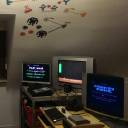
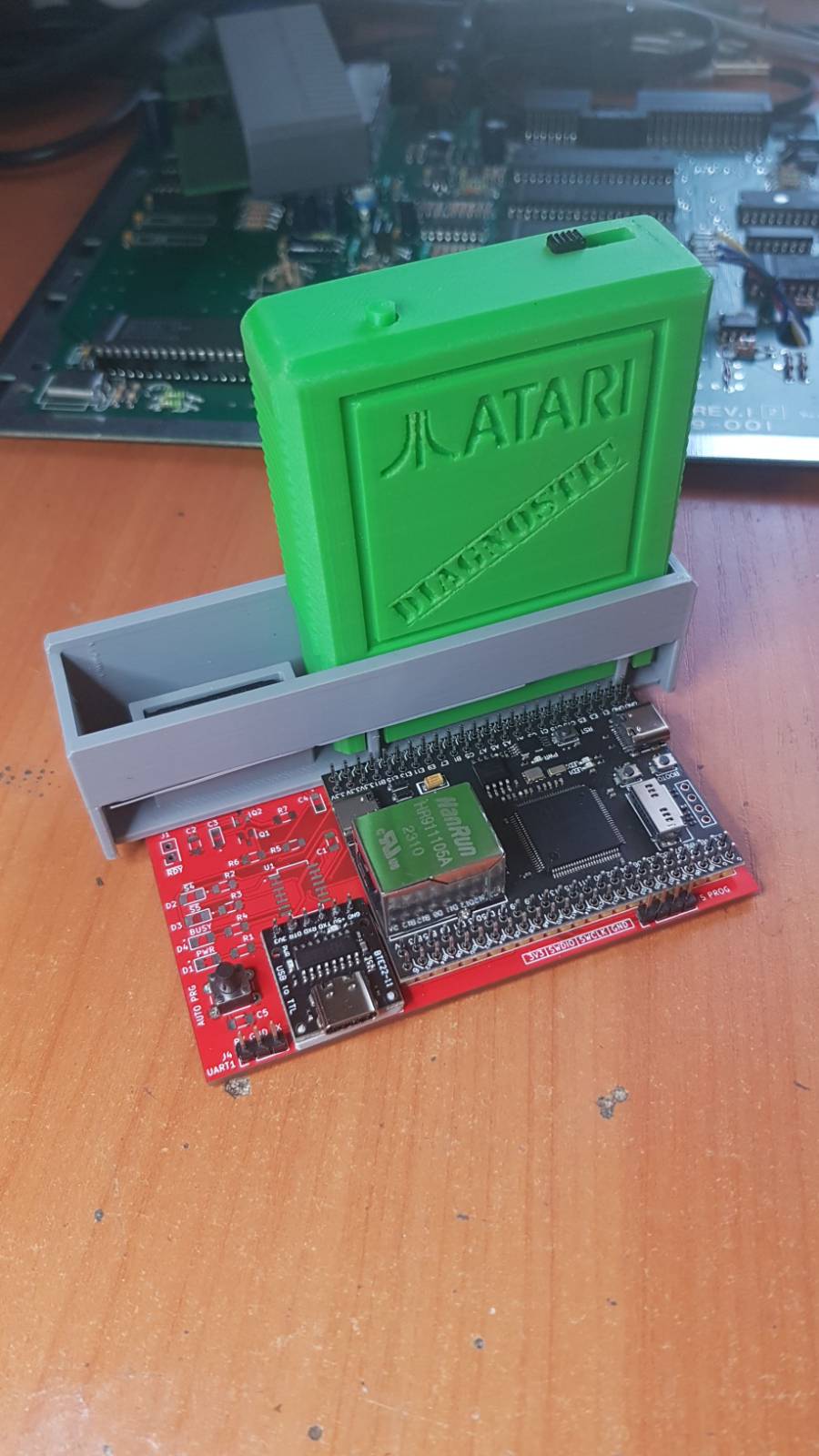
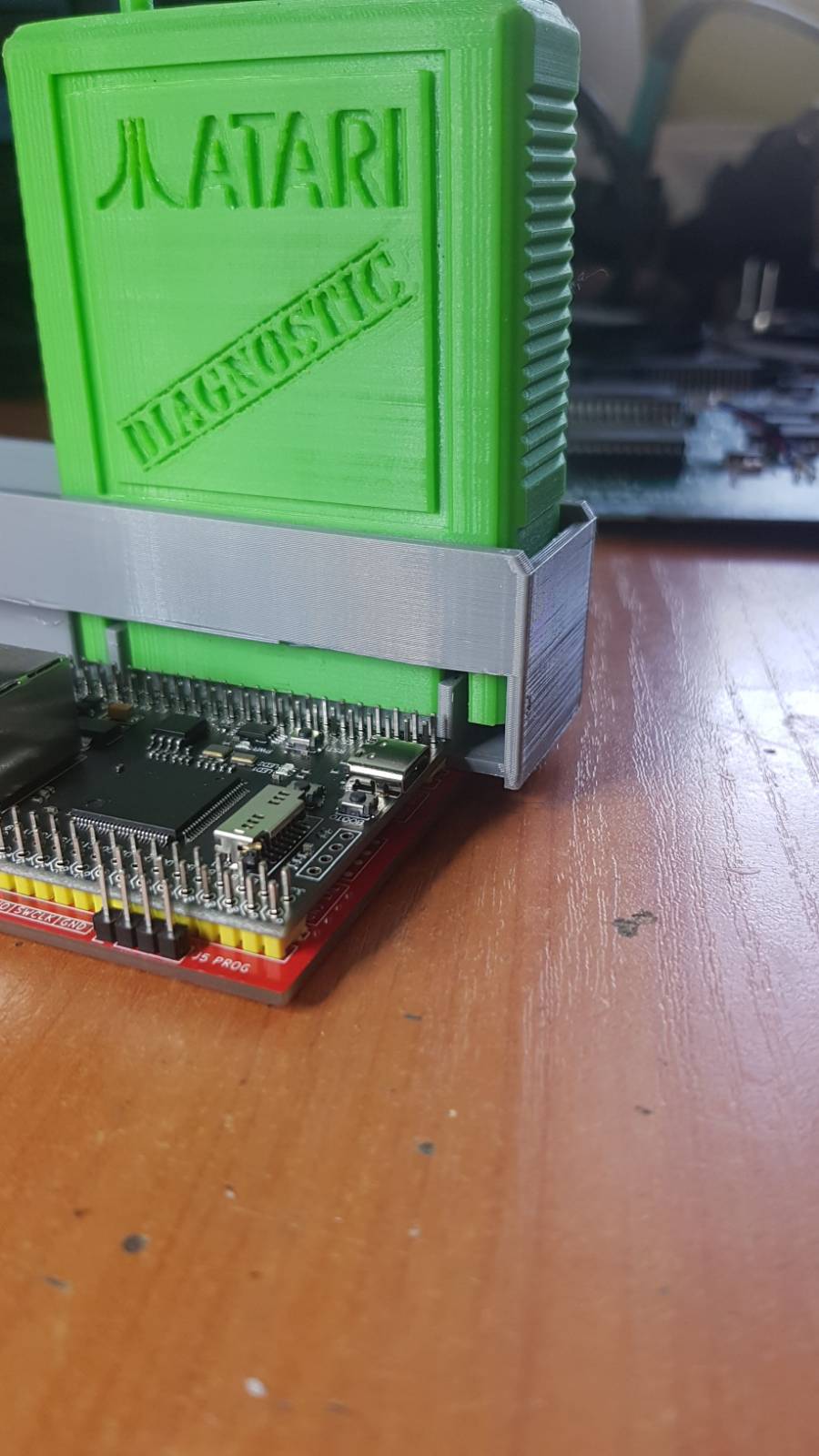
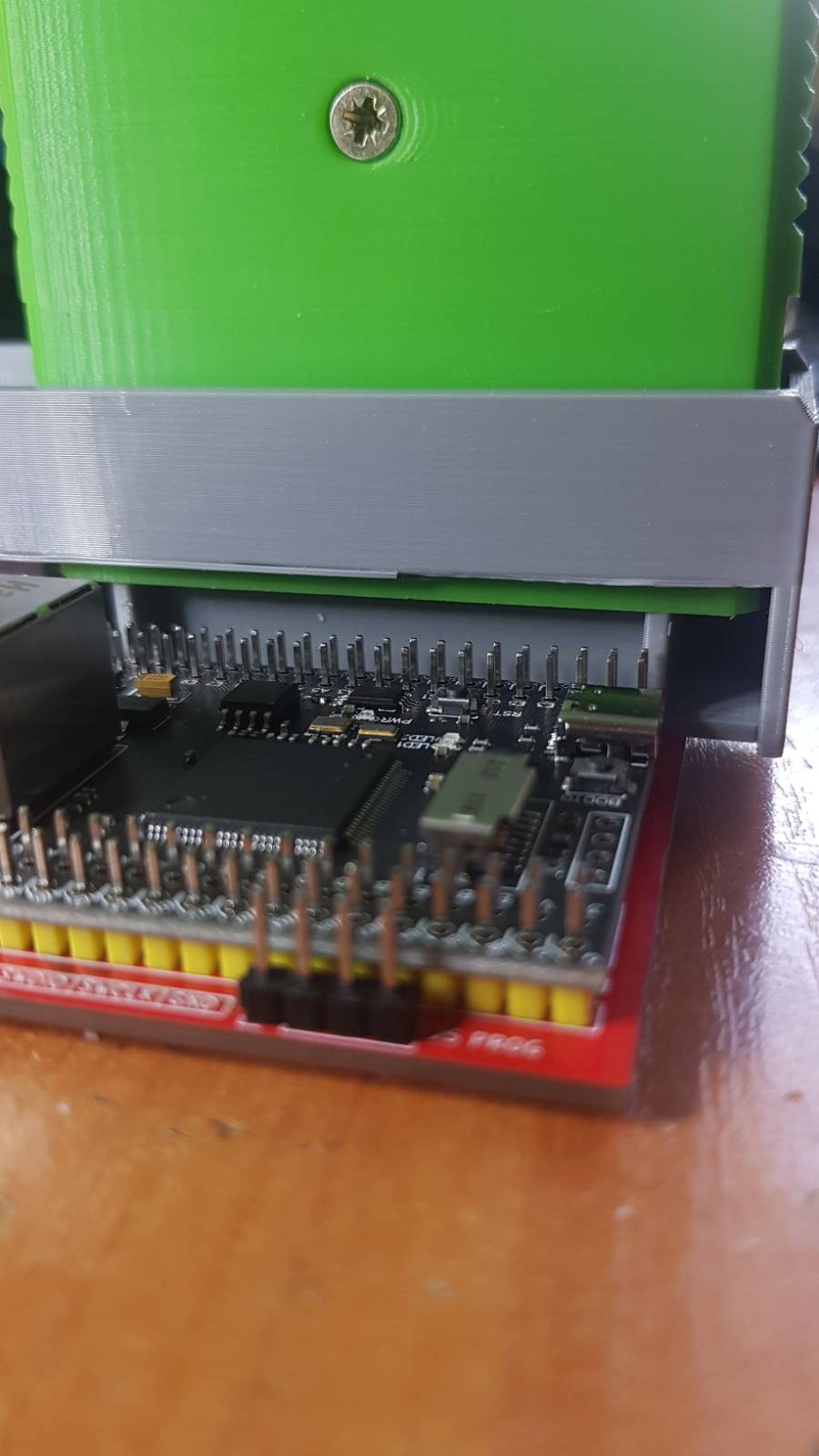
Ein paar Bilder vom Prototyp:
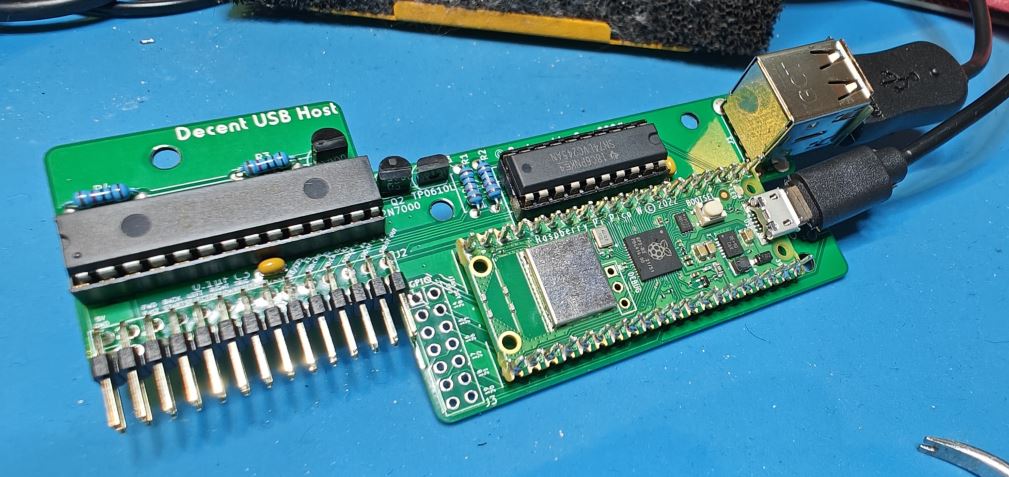
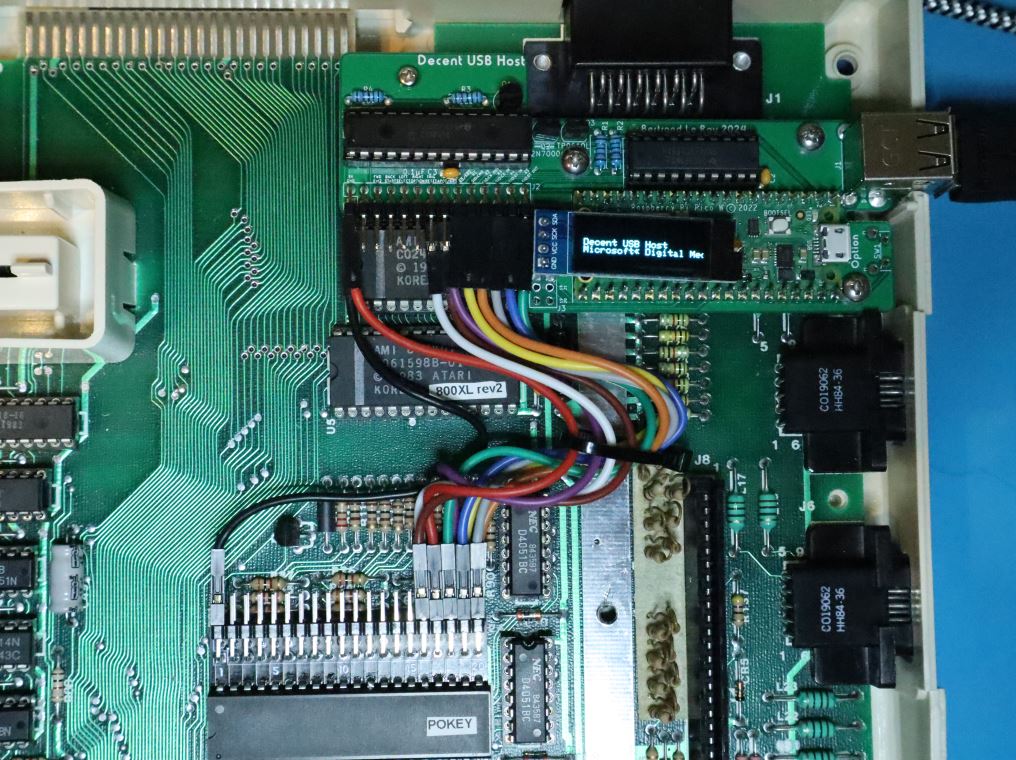
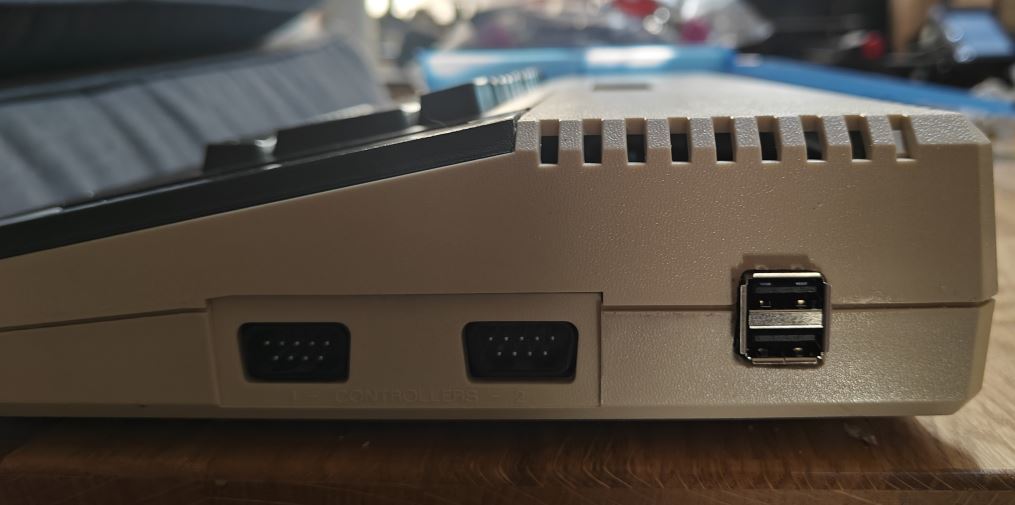
Und noch ein Youtube-Video dazu: https://www.youtube.com/watch?v=hgaEhkeXd_A
Gtx,
andY